
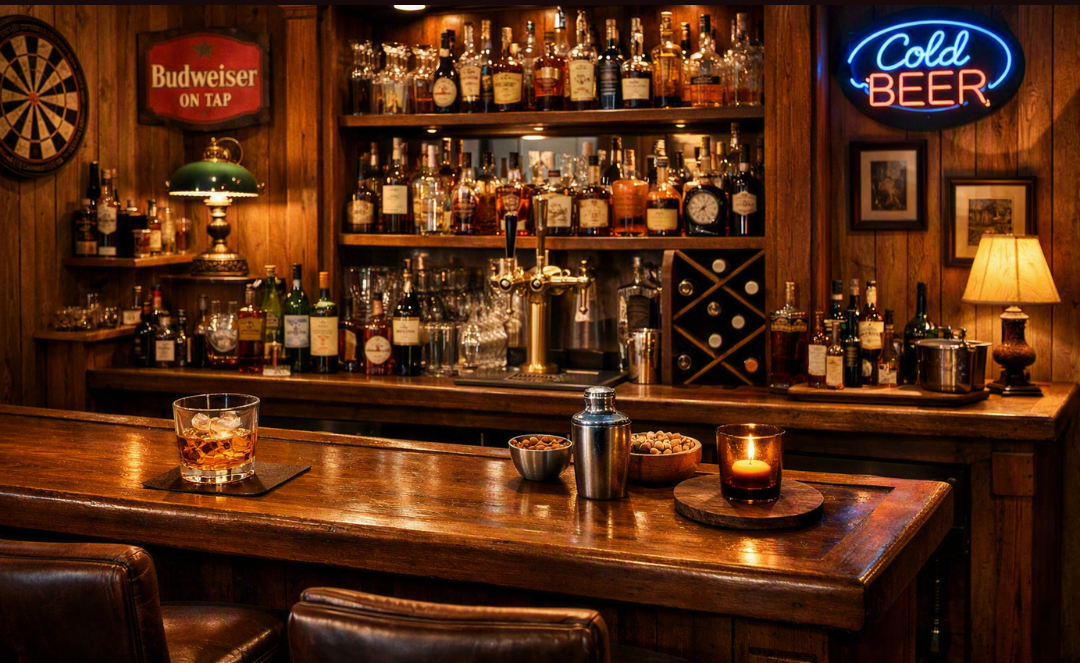

I shiver when my memory recalls the cold evenings of late fall and the utter brutality of the punishing frigid temperatures of our recent winter days in February. Those were times I might hunker down with a neat pour of some bottled-in bond bourbon, an Irish coffee or enjoy a classic Old Fashioned by the fireside.
Ah, but when spring is here, and summer is once again soon upon us, our thoughts turn to the weather ahead. Lazy days at the lake or beach, barbecues, sunbathing, relaxing on the deck…the time has come! With the advent of summer (my personal favorite) arrives the opportunity to shift gears into an array of different seasonal beverages. Once again I’ll welcome a wide variety of flavorful iced treats which are perhaps not as complicated to make as one might initially think. Setting up a home bar for this purpose in not only for convenience, but will also save the budget when creating your summer favorites at home.
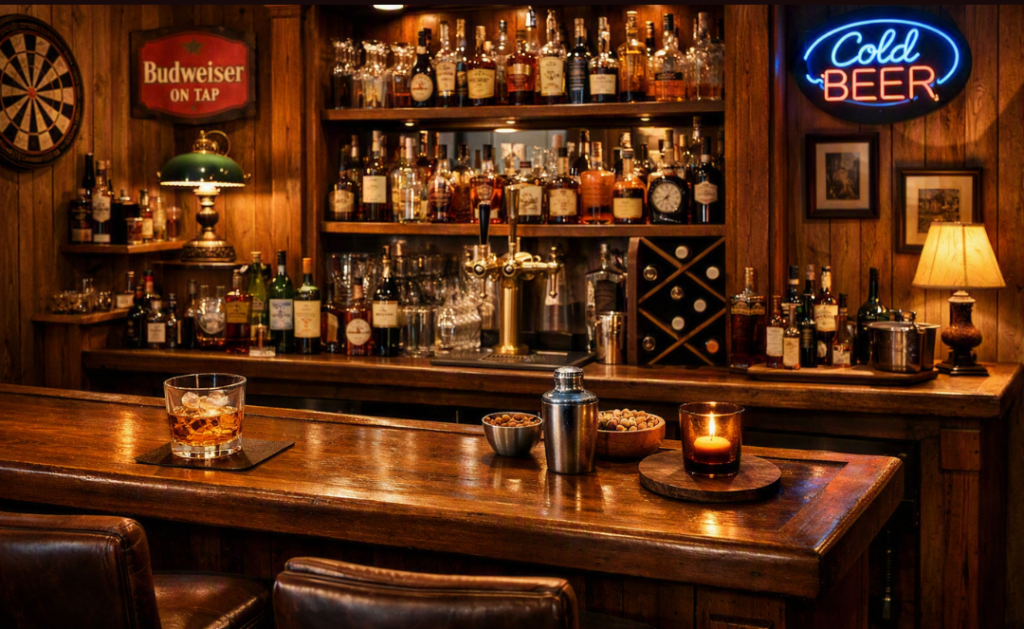
The basics for setting up an efficient home bar can honestly be whatever you prefer it to be, based on your space, interests, and stocked to supply your most frequently consumed mixed drinks. It is also an opportunity to branch out and explore many other cocktails on the cheap compared to buying them at a restaurant or bar. Creating and maintaining a home bar is a personal exercise in the same way you might approach setting up a new kitchen and stocking an empty pantry. What follows here is a general list for you to pick and choose from based upon your own needs. The initial set up can be done on your pace; today, or over time, adding needed items as you determine to perfect the next cocktail on your list.
The Location
First you will want to locate your home bar in an area that is not in direct sunlight and is relatively cool or at least shaded in an area that is relatively stable in temperature. Some bar spirits are strictly used as components for mixing and will only be used infrequently. Storing opened wine, garnishes and spirits in a warm location for a long time is a generally bad idea as they will deteriorate, lose flavor and potentially become so degraded as to be unusable after a time.
The Space
Here you could employ anything from a bar cart to a dedicated cabinet or a sideboard. Something with a solid flat surface you can work on; strength to accommodate the weight of bottles and glassware, with space for organized storage should work well. Something with a drawer is handy to have.
Basic Spirits
These spirits will be the basis for all the classic cocktails. Many cocktails do not require a specific brand but there are a few cases you’ll run into that. For the purposes of setting up a “basic” home bar, simply choose your base spirits based upon your own tastes and preferences. You’ll need to consider: white rum, unflavored vodka, dry gin, scotch or American Single Malt, brandy or cognac, bourbon, Tennessee Whiskey, rye, and perhaps an Irish whiskey. Tequila is a nasty weed juice, but I understand that some people like it, so maybe include that as well.
Complementary Spirits
These are wines and spirits which are needed as ingredients to mix a wide variety of cocktails. There are a lot of them to choose from, and I mean a lot. A basic set up would need to include sweet vermouth, dry vermouth, and preferably Cointreau, Curacao or any higher quality triple sec. Maraschino liqueur and Absinthe are also good to keep on hand.
Barware
For barware you can choose basic or fancy, either route will work just fine. You will need at very minimum a shaker, strainer, ½oz/1oz or 2oz combination jigger, bar spoon, muddler and mixing glass. Popular online retailers offer complete basic kits for the home bar starting at about $30.
Sweeteners; Both a simple syrup and Demerara syrup should be on hand. You might keep Grenadine Syrup and even pure maple syrup as a sweetening option. Amaretto syrup can also be handy.
Bitters
Bitters are necessary but used very sparingly (think drops or dashes). This is because they can be quite strong even though they are used in a broad spectrum of both classic and modern mixed drinks. Think of them as unsweetened flavor extracts. While the variety of bitters available seems to be endless, the basic home bar will only need three to begin with; Angostura, Peychauds and Regans. Many classic cocktails will require these.
Glassware
Here again you can equip your home bar with either the basics or more elaborate glassware. For starters, you will want a set of rocks glasses and wine glasses. Beyond these, you could add on others from a variety of tall glasses, coupes, shot glasses, Glencairn tasters, and so on.
Fruits and Garnishes
Garnishes are an integral component and a proper finish to nearly every cocktail. Basic garnishes to consider keeping on hand are pitted olives, pitted premium cocktail cherries (Luxardo brand comes to mind), and an assortment of fresh citrus fruits such as lemons, limes, and oranges.
Juices, etc.
Many popular cocktails call for orange juice, lemon juice, lime juice or cranberry juice. You will also need to keep a bottle or small cans or bottles of plain seltzer water and tonic and ginger ale. Cola is always handy–the real stuff with genuine sugar in it.
Books
Learning how to use your home bar and mix up a variety of new creations might take a bit of trial and error on your part. A few quality books on this subject will be a must. As you wander through the pages you’ll soon learn what is needed for your home bar. While there are hundreds of well-crafted and informative books available on the subject, I will only recommend two for the sake of brevity:
Each month, Whiskey Network Magazine treats our readers to a variety of new, classic, and delicious cocktails which have been delivered by a talented staff including Vicki Higginson, Genevieve Keller, Jim Zadrozny, Linh Do, and Dave Yancey. Be sure to check out Whiskey Networks’ Cocktail Club articles, current and past. With your new home bar set up and armed with a book or two, you will be well on your way to enjoying a much more flavorful summer!

